
When wastewater flows into a sewage treatment plant (STP), most people imagine a series of tanks, filters, and machines hard at work to clean the water. While mechanical components certainly play a part, the real stars of the process are far smaller: bacteria. These microscopic organisms are the unsung heroes of sewage treatment, breaking down waste and ensuring that water returned to the environment is clean and safe. In essence, sewage treatment plants rely heavily on nature’s own recycling system—powered by bacteria.
What Role Do Bacteria Play in Sewage Treatment Plants?
Bacteria are vital in converting organic and inorganic pollutants in sewage into simpler, harmless substances. Their job starts as soon as the wastewater enters the biological treatment stages of an STP. Let’s explore the specific roles bacteria play in the process:
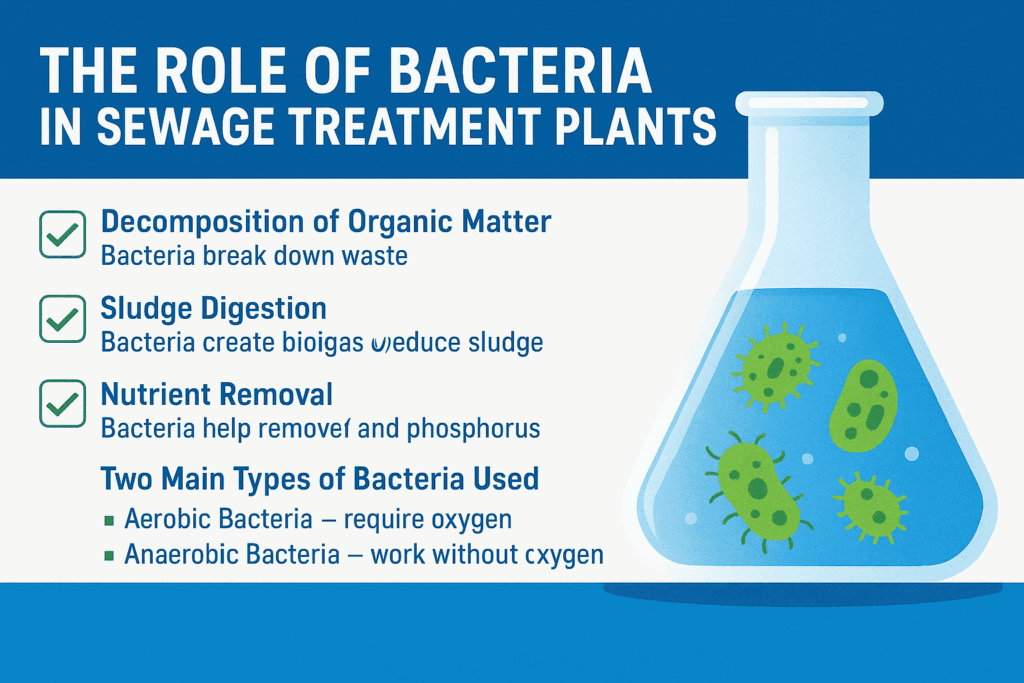
1. Decomposition of Organic Matter
Sewage contains a mix of organic matter, such as food particles, oils, fats, soaps, and human waste. Bacteria feed on these pollutants and decompose them into carbon dioxide, water, and other basic compounds. This significantly reduces the biochemical oxygen demand (BOD) and chemical oxygen demand (COD) of the water—two important measures of water pollution.
2. Sludge Digestion
One of the byproducts of wastewater treatment is sludge—a semi-solid mix of organic and inorganic material. In specially designed anaerobic digesters, bacteria work without oxygen to break down this sludge. During this process, the volume of sludge is reduced, and methane-rich biogas is produced. This gas can be captured and used as a renewable energy source, further improving the sustainability of the sewage treatment plants.
3. Nutrient Removal
Wastewater often contains high levels of nutrients like nitrogen and phosphorus. While essential for plant life, excess amounts in water bodies can lead to problems like algal blooms, which deplete oxygen in the water and harm aquatic life. Special strains of bacteria are introduced into STPs to remove these nutrients. For instance:
- Nitrifying bacteria convert ammonia into nitrate.
- Denitrifying bacteria then convert nitrate into nitrogen gas, which is released harmlessly into the atmosphere.
- Other microbial strains aid in phosphorus removal through biological uptake.
Types of Bacteria Used in STPs
There are two main categories of bacteria used in sewage treatment:
1. Aerobic Bacteria
These bacteria require oxygen to survive and thrive. In STPs, oxygen is pumped into aeration tanks, creating the perfect environment for aerobic bacteria to flourish. Here, they efficiently break down organic pollutants, producing carbon dioxide and water as byproducts. This process is often referred to as the Activated Sludge Process, which is one of the most common biological treatment methods used worldwide.
2. Anaerobic Bacteria
Unlike their aerobic counterparts, anaerobic bacteria do not need oxygen. They are typically used in the sludge digestion stage. These bacteria decompose complex organic materials in the absence of oxygen, producing biogas that contains methane, a useful fuel. Anaerobic treatment is especially useful for treating high-strength industrial wastewaters and for sludge stabilisation.
Advantages of Using Bacteria in Sewage Treatment Plants
The biological treatment of sewage using bacteria offers several key benefits:
- Eco-Friendly: No harmful chemicals are used in the treatment process, reducing environmental impact.
- Highly Efficient: Bacteria can remove more than 90% of organic pollutants when managed correctly.
- Cost-Effective: Once the bacterial colonies are established, operational costs are low compared to chemical treatments.
- Energy Recovery: Anaerobic bacteria produce biogas, which can be harnessed to meet part of the plant’s energy needs.
Real-World Application: Jammu’s Urban Growth and Wastewater Needs
Urban centres like Jammu, with their rapidly growing populations, are facing increased pressure on their wastewater management systems. Efficient and scalable solutions are needed to handle the rising sewage volumes without harming the environment. This is where bacteria-based treatment systems offer a major advantage.
Companies such as Vishwamitra Water Technologies, a reputed name in wastewater treatment in Jammu, specialise in installing and maintaining STPs that use microbial processes. They offer customised solutions that align with local needs—whether it’s treating domestic sewage, handling industrial effluents, or recovering energy from sludge.
By implementing STPs powered by microbial action, cities like Jammu not only comply with environmental regulations but also make strides toward a more sustainable future. These solutions are also ideal for smaller towns, institutions, and industries that may not have access to high-end treatment technologies.
Conclusion: Working With Nature, Not Against It
Harnessing bacteria in sewage treatment plants is a smart, sustainable approach that aligns with natural ecological processes. These microbes are Earth’s original recyclers, having evolved over billions of years to break down organic matter and keep ecosystems clean. By leveraging their abilities, we turn wastewater from a liability into a resource—one that can be safely returned to nature or even reused.
In the journey toward cleaner cities and a healthier planet, these microscopic organisms play a mighty role. Investing in biological sewage treatment is not just about infrastructure—it’s about choosing harmony with nature.